
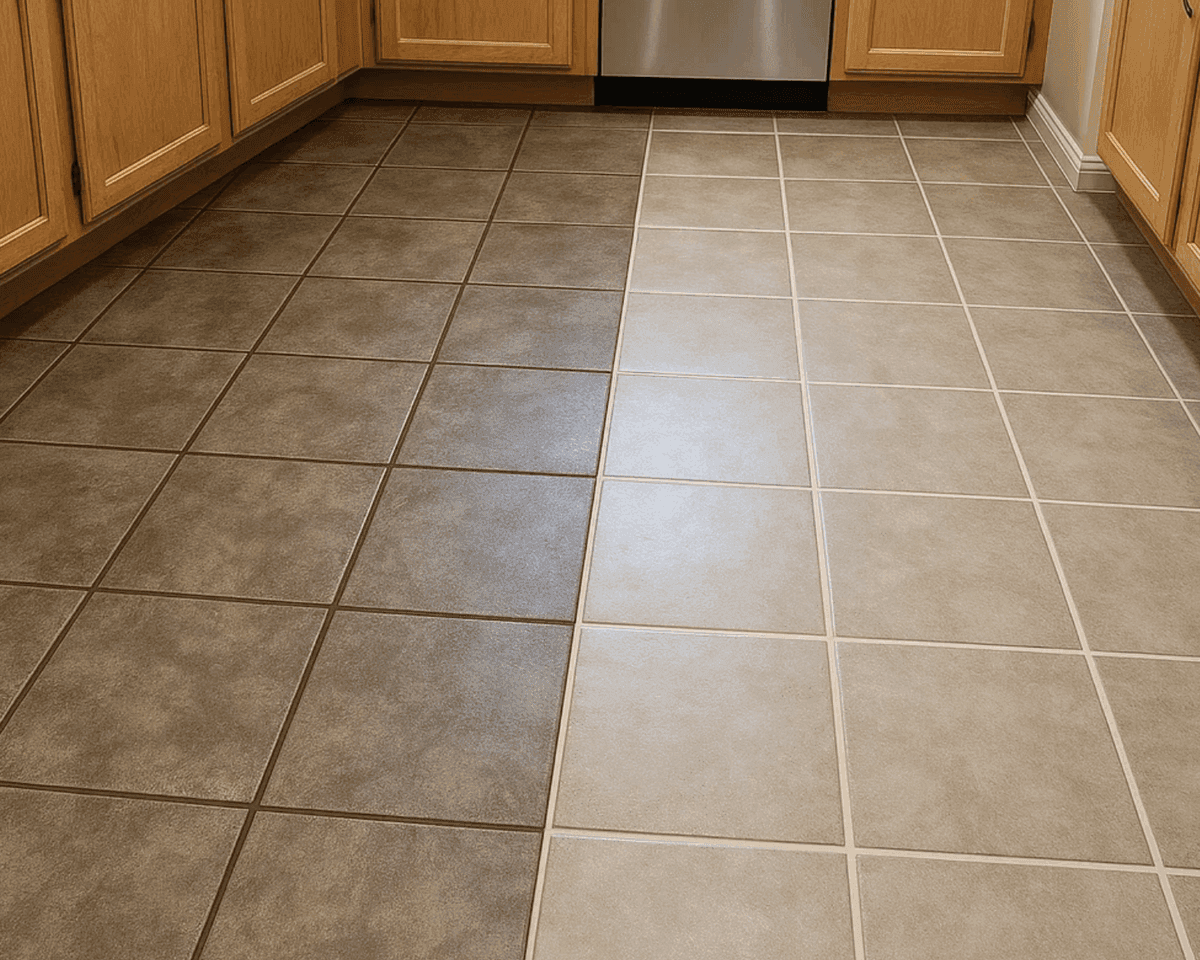
The tile is the easy part. Grout is where the real work is. Grout is porous, and over the years it soaks up mop water, soap film, foot traffic grime, and cooking grease. That's why a floor you mop regularly can still have grout lines that look progressively darker. No household mop reaches into those pores. If you've been looking at tile and grout cleaning in Belvedere, SC, that's the problem a professional service actually solves.
We clean tile and grout with grout-specific cleaners scrubbed deep into the porous lines by a rotary floor buffer. Then we rinse and mop the whole floor so there's no chemical residue left behind. The tile cleans up in the process, but the grout is where the transformation happens.
Most of the calls we get start with one specific room. The kitchen floor that used to be bright. The bathroom where the grout went gray. The entryway that catches every bit of grit from outside. All of those are fixable in a single visit.
Where this service makes the biggest impact
Kitchens
Kitchen tile gets the worst combination of foot traffic and splatter. Grease from cooking drifts down, mop water pushes it into grout lines, and the buildup is gradual enough that you don't notice until one day the grout looks permanently stained. The area around the stove and the path from the fridge to the sink are usually the worst. These clean up well because the darkening is almost always embedded soil, not structural damage.
Bathrooms
Shower floors are their own category. Soap scum, hard water mineral deposits, body oils, and moisture that never fully dries between uses create the conditions where mold and mildew take hold in grout. The tile around the toilet base is another common trouble spot. We don't ask questions — we just clean it.
Hallways and entryways
High-traffic areas show grout soil faster than anywhere else. Entryways are worst because grit from outside gets ground into every line with each pair of shoes. Aiken County's red clay compounds this — clay particles are fine enough to work deep into grout and stain it orange-brown.
Mudrooms, laundry rooms, and utility areas
These spaces get skipped in the regular cleaning rotation, and the grout reflects it. Mudroom floors that see wet shoes and dog paws through every season accumulate a layer that regular mopping barely touches.
Our 5-step tile and grout cleaning process
1. Assessment and inspection
We look at the floor before we start. We identify the tile type, check the grout condition, and note any cracked or missing grout. If there's damage that cleaning won't fix — cracked tiles or grout that's deteriorated to the substrate — we tell you before starting.
We also ask what cleaning products you've been using. Some household products leave buildup on tile that affects how our cleaners perform.
2. Pre-treatment of grout lines
We apply a grout-specific cleaner and let it dwell. This dwell time is where most DIY attempts lose ground. People spray and immediately start scrubbing, which doesn't give the solution time to break down embedded soil. We let the chemistry work for several minutes before a brush touches the floor.
For natural stone tile, we switch to a pH-neutral cleaner. Acidic products and natural stone are a bad combination.
3. Floor buffer agitation
After the dwell time, we run a rotary floor buffer across the tile. Its brush gets into the grout texture and breaks the bond between soil and surface, dropping into the low recess of each line that a flat mop simply bridges over. On heavily soiled floors, this step is the difference between a floor that looks slightly better and one that looks like the day it was installed.
Tile surfaces get agitated too, but they're usually in much better shape since they're non-porous or much less porous than grout.
4. Rinse and mop-up
With the soil broken loose and floating in the solution, we rinse the floor and mop everything away. Your own mop always skimmed the tops of the lines, so the grime below stayed put year after year. Once the buffer has scrubbed the grout at its own level, a thorough rinse carries all of it off the floor.
5. Final inspection
We walk the floor with you when everything is done. We point out any grout lines that responded differently (old repairs or different grout types can react unevenly), any tiles with issues, and anything else worth knowing. We wipe down baseboards and hand-detail the edges and corners the buffer can't reach.
Types of tile we clean
Ceramic and porcelain
The most common and the most straightforward. Both handle our standard process without special considerations. Porcelain is denser and tends to stay in better shape, but both clean up well.
Natural stone: travertine, marble, slate, limestone
Natural stone needs a different approach. Most of these stones are sensitive to acidic cleaners. Marble is the most sensitive — we use pH-neutral products to avoid etching or dulling the surface. Travertine has natural holes and pits that trap dirt, so the brush work and rinse get adjusted for it. Slate is more durable but uneven surfaces mean grout depth varies.
If you have marble, we'll discuss specifics on the phone before scheduling.
Terracotta and saltillo
Case-by-case tiles. They're soft, porous, and usually sealed with a topical sealer. The wrong cleaning approach strips the sealer. Call and describe what you have — we'll tell you if it's something we can handle.
Reading up before we arrive
Grout questions rarely stop at one room. We keep the full playbook on Safe-Dry's national tile site, where a detailed piece on deep-cleaning grout lines sits alongside guides to grout discoloration, leftover installation haze, and the quirks of porcelain versus ceramic. Worth ten minutes if you want to understand your floor before we show up.
Maintaining tile and grout after cleaning
Clean spills quickly. The single biggest thing you can do. A spill left sitting on grout stains within an hour.
Avoid harsh chemicals. Bleach-based cleaners look effective for a week, then the discoloration creeps back while the grout takes the abuse. A pH-neutral tile cleaner is better for routine maintenance.
Use soft tools. Wire brushes on grout feel productive but rough up the surface, creating more places for dirt to grab. Soft bristle brushes or microfiber mops are better.
Schedule routine cleaning. Once a year for most homes. Kitchens and bathrooms with heavy use benefit from every six to eight months.
How long does it take
A kitchen and one bathroom together runs ninety minutes to two hours. A full main level of tile in a bigger home is closer to half a day. You can walk on the tile as soon as we're done. It's barely damp.
Pair tile cleaning with a carpet cleaning or hardwood cleaning if you're doing a whole-house reset.
Book tile and grout cleaning
Call us at 803-310-3848 or request a quote online. We serve Belvedere, North Augusta, Aiken, and every Aiken County community on our route.